

Risk Management · 2025
In this section3 topics
Risk Management Policy & Plan
Policy & Plan Description
The Company recognizes the importance of preventing risks in its real estate development business for sale, rent, and comprehensive residential services, as this business may be affected by various internal and external risk factors. Therefore, the Company assesses risk factors and implements preventive measures in all aspects, including studying consumer behavior and the needs of target customer groups in terms of location, project type, house design, and price levels, among others. Research is conducted both before and during project implementation to effectively reduce risks from changes in consumer behavior, minimize sales forecast discrepancies, reduce liquidity problems, and ensure the Company's investment is utilized efficiently in project development.
The Company recognizes and values the importance of good corporate governance and management to drive organizational growth and stable business expansion.
has a stable financial position and generates appropriate returns for shareholders. The Board of Directors has appointed a Risk Management Committee, comprising independent directors and executives. This committee has developed a risk management policy, duties, and responsibilities for managing risks, preventing, reducing risks, or effectively mitigating potential impacts. Furthermore, the Company places importance on preventing corruption. The Company has established a policy for compliance with anti-corruption laws and conducts continuous annual corruption risk assessments. A policy for preventing involvement in corruption has been defined and included in the Company's Corporate Governance Policy and Business Ethics Handbook, which has been published on the Company's website.
Operational Framework
Good Corporate Governance and comprehensive risk management covering all aspects of risk. with the Audit Committee ( Audit Committee) Responsible for reviewing the risk management system under the supervision of the Board of Directors to ensure the organization's risk management aligns with its objectives. is at an acceptable level for the organization, and establishes risk management policies for all units to adhere to, including the development of strategies and the assessment of both external and internal risk factors, covering all aspects of risk such as strategic, operational, financial, compliance, and event-related risks, as well as corruption risks.
by reviewing both internal and external risk factors that may affect the organization annually.
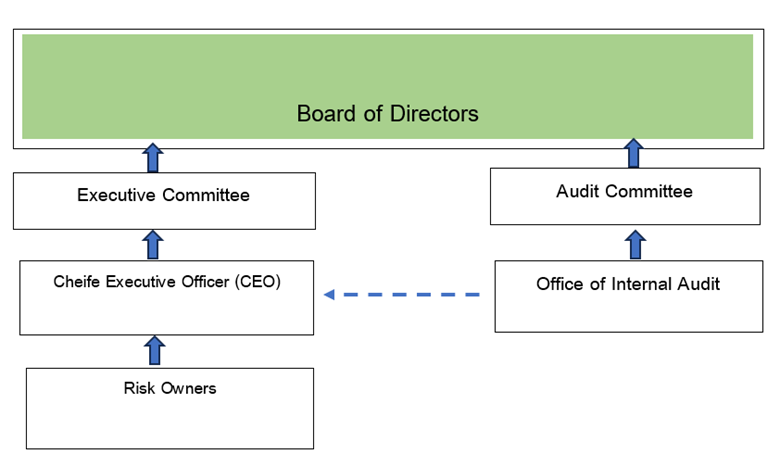
with the following risk management structure, roles, duties, and responsibilities:
Board of Directors
Responsible for setting policies, strategic directions, and overseeing an effective risk management system, by defining the framework for the company's risk management operations, covering various risk aspects, including climate change governance, as well as establishing policies, structure, roles, duties, and responsibilities of those involved in risk management activities, and overseeing potential risks to the company, to help the company achieve its stated objectives and goals. In the year 2025, to ensure the company's operations are efficient. The Board of Directors regularly monitors, acknowledges, provides recommendations, and oversees risk management operations through reports from management.
Audit Committee
Comprises 3 independent directors, responsible for overseeing and reviewing risk management within the organization, with a focus on auditing the internal control system (Internal Control) and compliance with relevant policies, to ensure that the company's internal control system is appropriate and sufficient to oversee operations in line with goals, objectives, laws, and regulations consistent with the guidelines of the SEC and the Stock Exchange of Thailand, as well as considering accurate and reliable financial reports with complete and sufficient disclosure of information, to enhance confidence in the organization's auditing and risk management processes effectively.
Executive Committee
Comprises 4 directors, responsible for managing risks within the organization, overseeing specific and clearly defined risks with systematic operations, covering economic, social, and environmental risks. The Board of Directors has approved the establishment of a Risk Management Committee to define the framework for the company's risk management operations, including policies, structure, roles, duties, and responsibilities of those involved in risk management activities, and to oversee potential risks to the company, to help the company achieve its stated objectives and goals.
Chief Executive Officer
Responsible for establishing a risk management system in accordance with the policies and guidelines set by the Board, considering and defining strategies, and ensuring the implementation and monitoring of enterprise-wide risk management.
significant risks in both business operations and sustainability, including climate. Communicate and develop an organizational culture aware of risks, and review the suitability of systems and measures to align with business changes, regulations, and relevant legal requirements.
Internal Audit Department
Responsible for inspecting and reviewing operational processes to ensure compliance with relevant policies, regulations, rules, and guidelines, to ensure the company's internal control system is appropriate, and to report to the Audit Committee for submission to the Board of Directors.
Risk Owners
Responsible for identifying, analyzing, and assessing risks, and developing risk management plans at an acceptable level, to be presented to the Risk Management Control, Monitoring, and Coordination Working Group.
Risk Management Process
Objective Setting
Define Risk Rating Scale and Risk Appetite, including Risk Tolerance.
Risk Identification
Risk Assessment
Risk Response
Risk Management Monitoring and Reporting
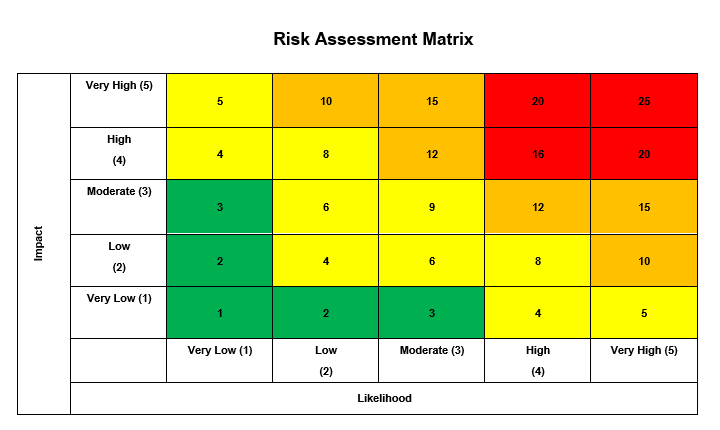

In this regard, the Company has defined acceptable risk levels under Risk Assessment by The Company's acceptable risk level (Risk Appetite) refers to risks that have been assessed and are within Low Level is considered an acceptable risk level, but controls are in place to prevent the risk level from escalating, and there is a defined Risk Tolerance Level refers to risks that are flexible from acceptable criteria. (score not exceeding 15 points) where the Company's risk management is within acceptable criteria and does not cause significant impact. For risk levels exceeding the Company's acceptable risk appetite (Exceeding Risk Appetite), these are risks that have been assessed as being at a level from medium to extreme.
Policy Document Link
https://senxgroup.com/wp-content/uploads/2025/04/7_SENX_Enterprise-Wide-Risk-Management-Policy_21-1-2568.pdf
Page Number in Report
1-3
Risk Factors — Overview
Risk Factors — Introduction
Organizational Risk Management Culture
to promote awareness, understanding, and practices related to risk management at all levels of the organization, ensuring that everyone in the organization participates in recognizing risks and knowing how to effectively address them. A strong risk management culture can help the organization face risks with stability and sustainability.
The company therefore promotes risk awareness by providing training to employees to familiarize them with the risks the organization may face, whether financial risks, business operational risks, or risks from external factors. Effectively communicate important risks and risk management methods to all employees in the organization. Focus on the participation of everyone in the organization by raising awareness of the role in risk management and fostering an understanding of the roles and responsibilities in identifying and managing risks related to employees' work. promoting responsible decision-making Decisions should consider the potential impact of risks, and long-term impacts must be analyzed under careful and appropriate risk consideration. Management prioritizes risk management by supporting and promoting risk management, with mechanisms for risk management within the organization. continuous evaluation and improvement by regularly monitoring and evaluating risk management performance to ascertain whether the measures implemented are appropriate and effective. Furthermore, fostering a strong risk management culture will enable the organization to manage various risks efficiently, mitigate the impact of potential risks, and build long-term sustainability for the organization.
The company continuously monitors various situations across economic, social, and environmental dimensions that tend to be risk factors with the potential to impact the organization, including risks affecting current business operations and new risks emerging in the next 3-5 years. The company has defined acceptable risk levels, including risk indicators, which have been approved by the Risk Management Committee. The results of these risk factor assessments are then used to develop an appropriate risk management development plan.
For effective risk management, the company organizes meetings and monitors organizational risks through the Risk Management Control, Monitoring, and Coordination Working Group to track the risk assessment process and monitor risk management outcomes every quarter. Important issues are then reported to the Risk Management Committee for consideration and subsequently presented to the Board of Directors for acknowledgment and further recommendations.
This year, from the monitoring of risk assessments, it was found that the company has fully implemented the planned initiatives. The company continues to monitor risk issues arising from internal and external factors to ensure that most of the risks of
The company reduces or maintains it at an acceptable level.
Risks to the Company's Business Operations
Risk Register
| Risk Name | Risk Characteristics | Consequences | Management Measures | Related Risk Factors |
|---|---|---|---|---|
| Competitive Risks in Real Estate Development Business | As of the end of 2025, the remaining supply in the housing market was approximately 239,168 units, with a total value of approximately 1,341,313 million Baht, an increase of about 2-5% from the previous year due to demand not fully recovering and a slowdown in public sector sales. Divided into main categories, including:
The real estate market in this area remains highly competitive, with hundreds of developers, including those listed on SET/MAI and smaller companies. Consequently, no single developer can definitively dictate prices and supply in the market. Buyers have numerous options and can easily compare products through online channels and various housing exhibitions. |
| The real estate market, whether residential or commercial, cannot be considered solely as a whole. It must be segmented by area and price level, because a good market for one developer may not be a good market for another, and a good location or price for one consumer may not be a good location or price for another. Therefore, the company thoroughly studies market data and conducts feasibility studies at the local level every time before commencing investment. Competition in the real estate market therefore requires in-depth information from market research, both broad and in-depth, for each area, each type of real estate, and each price level. The company continuously conducts such market research. Feasibility studies are conducted for the development of each project, from preliminary studies to thorough and detailed analyses in terms of finance, marketing, design, etc. We are therefore confident in developing projects and meeting market demands according to current trends and future prospects. The company has a strong and active collaboration with Hankyu Hanshin Properties Group from Japan, with whom it has been a business partner for over 9 years. This partnership helps promote the development of residential projects with high quality and standards. The company can control competitive risks by creating differentiation through seeking new opportunities, such as considering diversifying the business into real estate sectors related to public health and elderly care, which aligns with public health concerns. This also involves seeking opportunities in new areas, quickly acquiring land in suitable locations, responding to customer group needs at desired price points consistent with purchasing power and travel conditions, studying other innovations that can be extended to the real estate development business, developing various applications, and continuously developing personnel to create and improve the best products and services for customers. Furthermore, the company can seamlessly expand into businesses related to the real estate sector, such as solar energy businesses, which can be applied to residential and commercial properties, warehousing businesses, project management businesses, real estate brokerage businesses, golf course businesses, etc. | 728 · Description: Volatility in the industry in which the company operates · Info category: STRATEGIC_RISK · 729 · Description: Behavior or needs of customers / consumers · Info category: STRATEGIC_RISK · 730 · Description: Government policy · Info category: STRATEGIC_RISK |
| Risk of contractor and labor shortage | Thailand continues to face a persistent labor shortage in the construction sector, particularly concerning skilled labor and construction workers in urban and suburban areas. This situation has compelled real estate development businesses to increasingly rely on labor from neighboring countries. Concurrently, the government's ongoing investment in transportation infrastructure and public utility projects has significantly increased the demand for labor in the construction sector, which may lead to a shortage of both labor and contractors during specific periods. | Labor and contractor shortages may lead to prolonged project construction periods, increased labor and construction costs, and could also affect the ability to control costs and deliver projects according to the planned schedule. Furthermore, the continuous adjustment and increase of minimum wage rates, particularly in Bangkok and its metropolitan areas, may result in higher labor costs for developers and impact the overall cost structure of real estate development projects. | The Company places importance on systematically managing contractor and labor risks. This includes selecting qualified and standardized contractors according to the Company's criteria and fostering long-term collaboration through continuous engagement to enhance stability in construction project execution. In addition, the Company has established appropriate construction plans and timelines, closely monitors and controls progress, and stipulates conditions and penalties for late delivery of work, to help mitigate construction timeline risks, control costs, and reduce the impact of labor fluctuations. Concurrently, the Company has prioritized the management of Emerging Risks arising from changes in labor structure, government policies, and the business environment. This involves continuous review and improvement of contractor and labor management approaches, as well as elevating work standards and applying appropriate technologies to enhance construction efficiency and address long-term challenges. | 739 · Description: Shortage or reliance on skilled workers · Info category: OPERATIONAL_RISK · 730 · Description: Government policy · Info category: STRATEGIC_RISK |
| Risk from land acquisition for future project development | Land for residential development in suitable locations, at appropriate prices, and of appropriate sizes is becoming increasingly scarce, starting to run out, or is available only at prices too high to develop projects that meet the company's target groups in each location. Increased competition in the real estate business has led to intense competition among developers for land acquisition, especially in prime locations in central Bangkok or areas along mass transit routes. This may expose the company to risks related to land procurement and acquisition not aligning with business plans, as well as rising land prices impacting project development costs, potentially preventing projects from achieving returns in line with investment plans. | The Company holds undeveloped land (Land Bank) that is not yet ready for project development, resulting from business acquisitions that included undeveloped or incomplete development land, or from land acquired in the past and held for future project development. However, since land is a high-value asset requiring significant investment, and project development takes at least one year per project, depending on the project size. Investing in land acquisition for future holding without immediate development plans for that area carries the risk of reduced liquidity and the inability to utilize such capital for working capital or for developing other projects. Furthermore, it increases project development costs due to the financial costs incurred from land acquisition. Additionally, land tax obligations under the law must be considered. However, the Company has a plan for land acquisition for project development, ranging from defining guidelines for land procurement each year, considering target areas and land price levels that yield high returns on investment and align with the type and price level of the real estate projects to be developed, to ensure a continuous supply of land for project development. In the consideration of acquiring each plot of land, a preliminary feasibility study and evaluation for project development will be conducted, considering the opportunities and potential from developing such land, the growth direction of residential areas, the development routes of rail mass transit projects, legal restrictions, and a thorough title deed verification, to mitigate risks in all aspects before making a decision to purchase the land. | Market studies are regularly conducted to assess trends and potential for residential development in each area, in order to mitigate risks from rising land prices, the risk of being unable to acquire locations with future development potential, or risks from changing government policies, such as land and building taxes and the planning of rail mass transit projects. In addition, the Company procures land by purchasing directly from landowners, handled internally by its departments under clearly defined land procurement procedures, and also procures land through brokers, with whom the Company maintains good relationships with several land brokers, enabling continuous land procurement for future real estate development projects. | 762 · Description: Change in financial and investment policies of financial institutions that affect business operations · Info category: FINANCIAL_RISK · 730 · Description: Government policy · Info category: STRATEGIC_RISK |
| Regulatory and Legal Risks | Impact of changes in legal regulations and operational procedures for the real estate business. There are several relevant rules, regulations, or laws, such as the Land Allocation Act, the Condominium Act, and the National Environmental Quality Promotion and Protection Act, among others. In the past, the Company has had a clear policy to operate in compliance with relevant laws and regulations and has prepared for new regulations, studying the impacts, advantages, and disadvantages of various rules to maximize benefits for the Company and all stakeholder groups. The promulgation of the Personal Data Protection Act B.E. 2562 (2019), which came into effect on June 1, B.E. 2565 (2022). This law directly impacts business operations, as data is considered a type of asset in the operations of all organizations. For example, personal data of employees, business partners, and especially customers, carries a risk of violating the regulations under the Personal Data Protection Act if there are no secure personal data management measures in place. | may cause project delays, incur additional costs, or prevent the project from being executed as planned, thereby impacting revenue, operating results, and stakeholder confidence, and may also lead to fines or legal proceedings. | For the company, as a data controller, various policies have been established in relation to the Personal Data Protection Act (PDPA). These include the implementation of personal data security measures, the establishment of operational procedures compliant with legal requirements from the initial stage of data acquisition for business use, data storage and retention, and the provision of training to foster understanding of the essential aspects of the law and correct practices for employees directly involved with customer and partner personal data. Furthermore, understanding of the PDPA is communicated to all employees within the organization to raise awareness and ensure caution in the use of personal data. | 756 · Description: Change in laws and regulations · Info category: COMPLIANCE_RISK |
| Housing Loan Credit Policy Risk of Financial Institutions | Risks related to financial institutions' housing loan policies stem from the economic slowdown, Thailand's high household debt burden, and the uncertainty of public income. This has led financial institutions to be more stringent in considering loan approvals. Data from 2024–2025 indicates that housing loans in the commercial banking system grew by only approximately 1–2 percent per year, which is considered the lowest level in over 20 years. Although the Bank of Thailand has implemented measures to relax Loan-to-Value (LTV) criteria since 2025 to support greater access to credit, financial institutions still primarily focus on assessing borrowers' repayment ability. | Stricter credit approval may cause residential buyers, especially middle-income groups and first-time homebuyers, to be unable to access credit as needed. This results in a slowdown in property transfer rates and sales of real estate projects, which may impact the company's revenue, cash flow, and ability to manage inventory. Furthermore, the project sales period may lengthen, and the company may need to implement additional sales promotion measures or financial conditions, leading to a reduction in the company's profit margins during certain periods. | The company also implements measures to screen retail buyers, or pre-approval for booking housing estates or condominiums, to mitigate issues of purchase cancellations due to unsuccessful loan applications and to minimize lost sales opportunities. Furthermore, it coordinates with financial institutions, including both commercial and state-owned banks, to closely monitor the lending policies of each institution and to adapt its loan management strategies for homebuyers to align with the specific requirements of each financial institution at various times. In addition, the company has launched the "Rent-to-Own Home – LivNex" project, an innovation developed by the company to address the challenges of customers in the mid-to-lower market segments who do not yet possess sufficient eligibility to directly secure loans from financial institutions. This program allows them to rent and save money concurrently, thereby enabling them to eventually acquire ownership of the property. | 762 · Description: Change in financial and investment policies of financial institutions that affect business operations · Info category: FINANCIAL_RISK · 730 · Description: Government policy · Info category: STRATEGIC_RISK · 1725 · Description: Income volatility · Info category: FINANCIAL_RISK |
| Risks from the fluctuation of construction material costs and minimum wage costs | Key factors in the company's business operations include, in addition to land acquisition costs, construction costs, which represent a significant risk factor impacting the company's business. Construction costs primarily consist of material costs and labor costs. The prices of construction materials are subject to fluctuations based on global supply and demand, economic growth, inflation rates, and domestic construction conditions, as well as adjustments to the minimum wage. This presents a risk of potentially higher construction costs in the future, particularly in the steel and steel products category, which has experienced substantial growth in line with increasing global steel prices. Furthermore, prices for various construction materials, such as electrical and plumbing equipment, concrete products, and other construction materials, may rise due to increased raw material costs, crude oil prices, and transportation expenses, especially if tensions arise involving countries that serve as key production bases. | Fluctuations in construction material and labor costs may result in project costs exceeding estimates, leading to a reduction in gross profit margins and potentially affecting the ability to set competitive selling prices in the market. Furthermore, if costs increase rapidly during construction, some projects may require work plan adjustments, experience delivery delays, or necessitate a reduction in certain specifications. This could impact customer satisfaction and the company's corporate image. | The company manages risks by carefully planning costs in advance. It utilizes long-term material procurement contracts or lump-sum contracts with contractors to mitigate risks from price fluctuations. This also includes selecting cost-effective technologies and alternative materials without compromising the quality of construction work. Furthermore, the company enhances the efficiency of construction processes and closely controls labor costs to maintain profitability and long-term competitiveness. | 728 · Description: Volatility in the industry in which the company operates · Info category: STRATEGIC_RISK · 730 · Description: Government policy · Info category: STRATEGIC_RISK · 750 · Description: Climate change and disasters · Info category: OPERATIONAL_RISK · 751 · Description: Impact on the environment · Info category: OPERATIONAL_RISK |
| Liquidity risk and access to funding sources | The real estate development business is a capital-intensive industry, encompassing investments in land acquisition, land development, construction, and sales. These activities collectively demand substantial capital until the company receives the majority of the sales value on the date of ownership transfer, which occurs upon the completion of construction. Furthermore, the company's project management duration typically ranges from one to two years or more, depending on the project's scale. Consequently, this business inherently involves risks pertaining to financial liquidity management and securing the necessary funding sources for its operations. | If the company is unable to manage its liquidity sufficiently or access funding sources as planned, it may lead to project development delays, postponement of new investments, or the necessity to rely on higher-cost funding sources. This would impact cash flow, debt repayment capability, and project returns, and could also affect investor and financial institution confidence in the long term. | The company has implemented a policy to increase liquidity in accessing funding sources by establishing business partnerships with several financial institutions, which have consistently provided strong credit support. The company will compare offers to select the most cost-effective options, including project development loans (Pre-Finance), for which the company has Pre-Finance limits to support all projects. The company also utilizes fundraising for liquidity management by issuing short-term bills, as well as short-term and long-term debentures suitable for funding project development and business expansion. The issuance of these debentures has been well-received by the market due to the company's reputation and business experience. Furthermore, the company prioritizes financial liquidity management by conducting business with careful consideration in project development, from selecting land locations for investment, conducting research to analyze the feasibility of various projects, and emphasizing the details of all critical components in each project to ensure the success of every project. Good and strong cooperation with Hankyu Hanshin Properties Group from Japan, a business partner for over 9 years, also helps enhance financial potential for even stronger growth. Furthermore, the Board of Directors has a clear policy on capital management, which includes risk management.
| 762 · Description: Change in financial and investment policies of financial institutions that affect business operations · Info category: FINANCIAL_RISK |
| Financial risk from increasing interest rates | Financial risk from increasing interest rates arises from the company's necessity to utilize both short-term and long-term financing sources for project development, including the issuance of debentures or borrowing from financial institutions. Interest rates fluctuate according to economic conditions and the monetary policy of the central bank. Should interest rates increase, this will directly result in an increase in the company's financial costs. | The increase in interest rates may lead to higher interest expenses for the company, impacting net profit and operating cash flow. Furthermore, it could diminish the ability to set competitive housing sale prices and indirectly affect customers' purchasing power due to increased housing loan repayment burdens. This, in turn, may result in a decrease in purchase decisions and property transfer rates. | The Company systematically prioritizes interest rate risk management by establishing policies to manage its capital structure appropriately and in line with the nature of the real estate development business, which requires long-term investment. The Company diversifies its funding sources, including loans from financial institutions, bond issuance, and the use of internal working capital, to avoid over-reliance on any single source of funds. Furthermore, it manages the proportion of fixed-rate and floating-rate loans in an appropriate ratio to mitigate the impact of interest rate fluctuations in the market. In addition, the Company plans its borrowings in alignment with the development plans and revenue recognition of each project. This includes carefully considering the debt structure and repayment maturity periods to maintain appropriate liquidity and debt-servicing capability. The Company closely monitors macroeconomic conditions and the monetary policy direction of the Bank of Thailand to inform its financial and investment decisions appropriately at each period. In terms of business operations, the Company manages project costs in conjunction with financial management. This involves considering appropriate selling prices, sales launch strategies, and project development timing to align with market conditions and changing financial costs. Furthermore, it collaborates with business partners and financial institutions to develop financial products and credit terms that facilitate customer purchasing decisions, which helps mitigate the impact of increased interest burdens on both the Company and homebuyers. | 761 · Description: Insufficient sources of funding · Info category: FINANCIAL_RISK · 762 · Description: Change in financial and investment policies of financial institutions that affect business operations · Info category: FINANCIAL_RISK |
| Shortage of resources/raw materials in construction |
|
|
| 728 · Description: Volatility in the industry in which the company operates · Info category: STRATEGIC_RISK |
| Community Participation and Impact on Quality of Life |
|
|
| 729 · Description: Behavior or needs of customers / consumers · Info category: STRATEGIC_RISK · 1717 · Description: ESG risk · Info category: STRATEGIC_RISK |
| Human Resource Management and Occupational Safety |
|
|
| 749 · Description: Safety, occupational health, and working environment · Info category: OPERATIONAL_RISK · 1717 · Description: ESG risk · Info category: STRATEGIC_RISK · 753 · Description: Impact on human rights · Info category: OPERATIONAL_RISK |
| Governance and Transparency |
|
|
| 759 · Description: Corporate Governance · Info category: COMPLIANCE_RISK · 1717 · Description: ESG risk · Info category: STRATEGIC_RISK |
| Compliance with Personal Data Protection Law |
|
|
| 756 · Description: Change in laws and regulations · Info category: COMPLIANCE_RISK · 759 · Description: Corporate Governance · Info category: COMPLIANCE_RISK |
| Climate Change and Adaptation |
|
|
| 750 · Description: Climate change and disasters · Info category: OPERATIONAL_RISK · 751 · Description: Impact on the environment · Info category: OPERATIONAL_RISK · 1717 · Description: ESG risk · Info category: STRATEGIC_RISK · 1719 · Description: Climate change and disasters · Info category: STRATEGIC_RISK |
| Climate Change Risks |
|
|
| 750 · Description: Climate change and disasters · Info category: OPERATIONAL_RISK · 751 · Description: Impact on the environment · Info category: OPERATIONAL_RISK · 1717 · Description: ESG risk · Info category: STRATEGIC_RISK · 1719 · Description: Climate change and disasters · Info category: STRATEGIC_RISK |
| Risks from information technology changes and cyber threats | Currently, information technology plays a crucial role in business operations. By applying technology to various work processes, it helps promote more agile and faster operations. However, the use of information technology comes with both opportunities and risks arising from cyber threats. Therefore, the risk of cyber threats is considered significant and has an impact on the company's operations. Should problems arise concerning the company's information technology systems or unauthorized access to personal data held by the company, it would inevitably affect the company's operations and reputation. | Information technology risks and cyber threats may result in the disruption of the company's operational systems, project delays, damage to critical data and customer privacy, as well as harm to the reputation and confidence of investors and stakeholders. Furthermore, it could increase costs for system improvements and problem resolution. | The company therefore maintains an information technology security policy to ensure that its personnel, users, executives, and other relevant individuals are aware of the importance of information technology security. This policy outlines IT security measures, including the enhancement of computer network systems to ensure availability and prevent network and server failures, thereby enabling continuous system operation. It also establishes strict security control measures such as computer security systems (Firewall), antivirus systems (Antivirus), the definition of data access rights based on the operational nature of each department, and the establishment of a data backup center network to support emergencies and ensure business continuity. The objective is to ensure that the company's information technology and computer systems operate without adversely affecting business operations, while also ensuring system usage complies with the Computer Crime Act, the Personal Data Protection Act, and other relevant laws, and preventing threats that could cause damage to the company. | 732 · Description: Changes in technologies · Info category: STRATEGIC_RISK · 744 · Description: Information security and cyber-attack · Info category: OPERATIONAL_RISK |
| International War |
|
|
| 731 · Description: Policies or international agreements related to business operations · Info category: STRATEGIC_RISK |
| Climate Change and Disaster Occurrence (Earthquake) |
|
|
| 750 · Description: Climate change and disasters · Info category: OPERATIONAL_RISK · 1719 · Description: Climate change and disasters · Info category: STRATEGIC_RISK |